
Supporting Bereaved Children ANd Their Classmates using ‘How to Mend A Friend’ by Karl Newson
Talking about death and bereavement with children is incredibly difficult. Understandably, most parents, caregivers and teachers would rather brush the topic under the carpet than talk about it openly with children.
However, new guidance for teaching Relationships, Sex and Health Education (RSHE) from the Department for Education means schools must now cover that change and loss, including bereavement, can provoke a range of feelings; that grief is a natural response to bereavement; and that everyone grieves differently.
It is also statistically likely that a teacher will support a bereaved child at some point in their career. Current analysis of mortality data, census information and other sources shows that in the UK, an adult with dependent children dies every 22 minutes. Put another way, 1 in 29 children between the ages of 5 and 16 will experience the death of a parent or sibling (Child Bereavement Network, 2015).
Death Can’t Be Ignored
In 2019, my own children’s teachers had no choice but to have these conversations following the death of my husband. They needed to talk about death with their Year 1 and Year 4 classes, and they had just two days to prepare themselves and my children’s classmates for my children’s return to school.
This was no easy task, but they did a brilliant job. My children’s return to school after their daddy’s death was on the whole gentle, compassionate and carefully planned by staff. This included how their classmates were told, how they were prepared, and how they were supported too.
Creating A Resource Rooted In Story
Grounded in both my professional practice and lived experience, my work with schools has included developing an INSET offer to support bereaved children. I have created downloadable resources and taken part in research exploring how picture books can support conversations about death and grief with children.
What felt like the next step was to create a resource specifically designed to support a bereaved child’s classmates, at the point when the reality of death enters the classroom and can no longer be ignored.
When I began thinking about how this support might look in practice, I knew it needed to be sensitive, age-appropriate and rooted in story. This shared understanding is what led me to collaborate with the inspirational team at The Story Project to create a research backed and teacher-led mini unit of work that brings together our joint years of classroom experience, The Story Project’s research and expertise in using stories to support wellbeing, and The Marfleet Foundation’s research and lived experience of childhood bereavement.
The Mini Unit Of Work
Based on the book How to Mend a Friend by Karl Newson, this unit of work (three lessons) helps children understand how they like to be helped and how to help others with a particular focus on bereavement and difficult times. The lessons also support children’s empathy building, encouraging them to think about how people like to be supported in different ways.
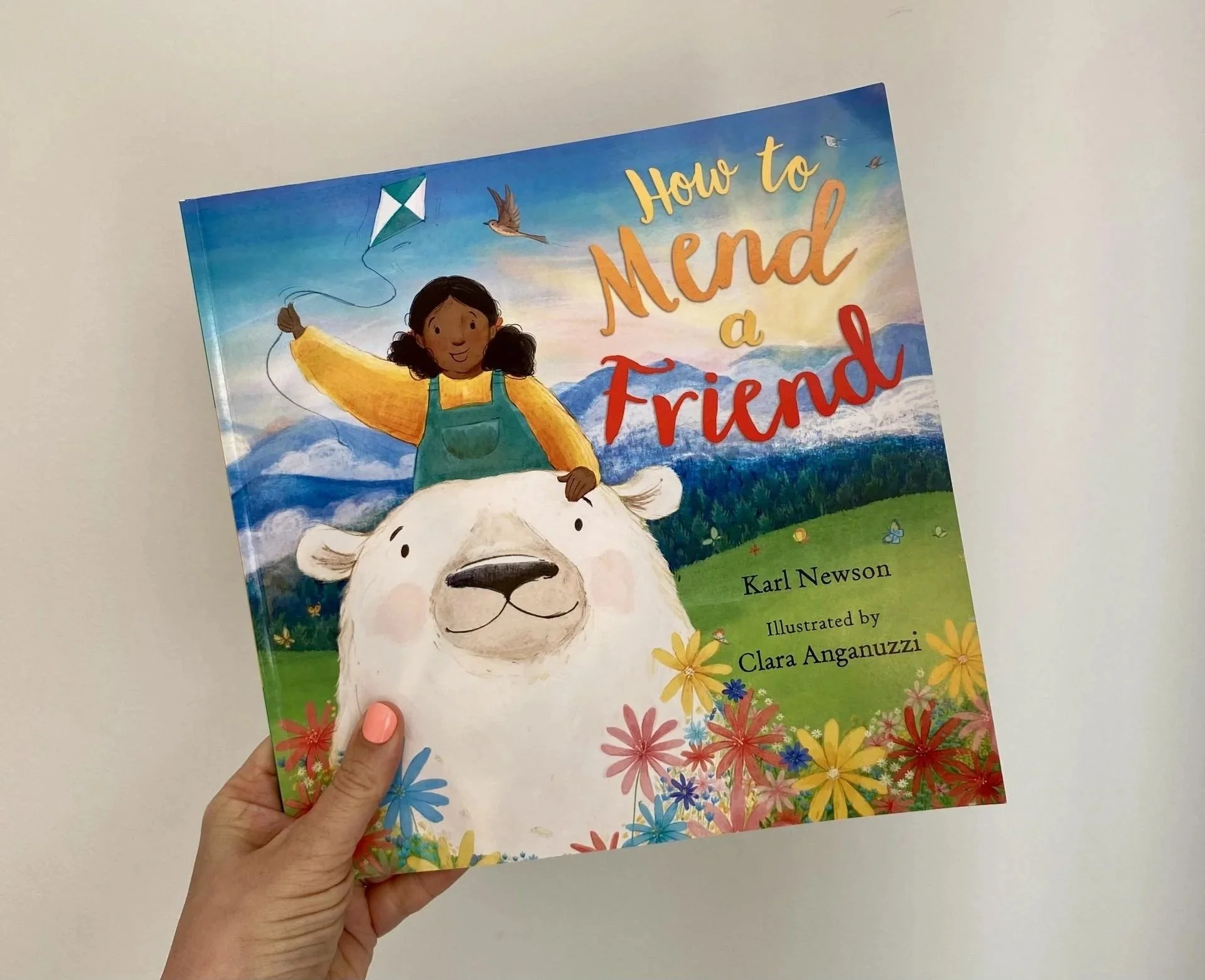
How to Mend A Friend
The book ‘How to Mend a Friend’ was written during a very challenging time in the author’s life when he was facing cancer treatment. He wrote the story after the wave of love and support he received from his friends and family helped him to overcome many of the emotional challenges of being poorly.
The story is beautifully told, looking at all the ways that people like to be supported. Our lessons guide children through this, supporting them to talk about the author’s life and other times of difficulty that people might need help with.
Using this story helps scaffold these conversations. It helps support teachers and classmates when they don’t know what to say, focusing instead on practical and empathetic ways to support a bereaved child. For children who have experienced grief or difficult times, it means that the conversation doesn’t feel too raw. They don’t have to talk about their own experiences if they don’t want to, instead they can take part in the conversation through the eyes of the character.
Download our joint resource here:
About The Story Project

Using the magic of stories to improve children’s wellbeing and literacy
Led by high-quality, popular books and rooted in the latest research, The Story Project have remarkable impact from Nursery to Year 8 with our fully resourced curriculums created by teachers.
Covering all the statutory elements of the RSHE curriculum (including the new July 2025 RSE changes), our resources help children to stay safe, build empathy, support positive relationships and learn strategies to manage their mental health.
Teachers and children alike love our lessons! The stories create a distance between the topic and the reader, making even those trickier subjects easy and fun to unpack. What’s more, the thought-provoking books make lessons engaging and memorable.